The human eye is one of the most intricate and fascinating features of our face, serving not only as a window to our emotions but also as a critical marker in distinguishing authentic media from manipulated content. For deepfake technologies—AI-driven systems that create hyper-realistic yet fabricated images and videos—the eyes, particularly the iris and pupil, pose a formidable obstacle. These elements are packed with subtle details that are difficult to replicate convincingly. Analyzing the shape, patterns, color gradients, deformations, and responses to environmental light in the eyes can reveal telltale signs of digital tampering. Below, we explore why the eyes remain a weak spot for deepfakes and how their unique characteristics aid in detection.
The Iris: Unique Patterns and Subtle Complexity
The iris, the colored ring surrounding the pupil, is a marvel of biological individuality. Its intricate patterns—composed of microscopic ridges, furrows, and striations—are as unique to each person as a fingerprint. In authentic photographs or videos, these patterns are sharp, detailed, and consistent across frames. For a deeper understanding of iris uniqueness, refer to this study on iris recognition: https://www.ncbi.nlm.nih.gov/pmc/articles/PMC3081985/.
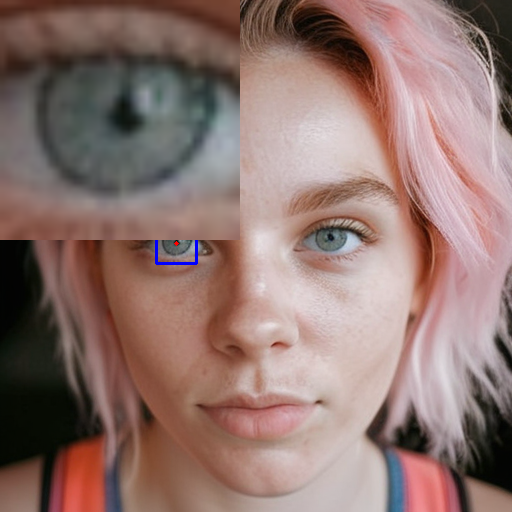
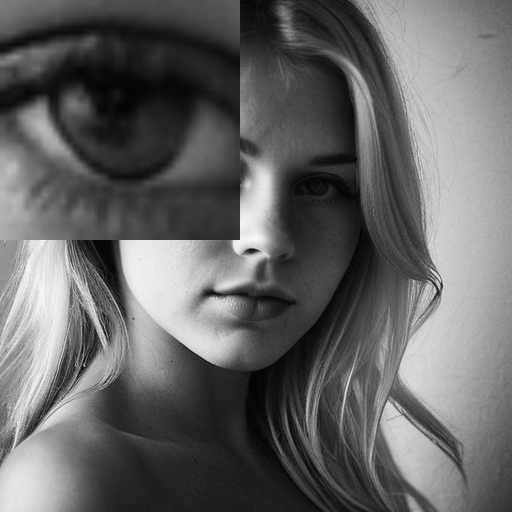
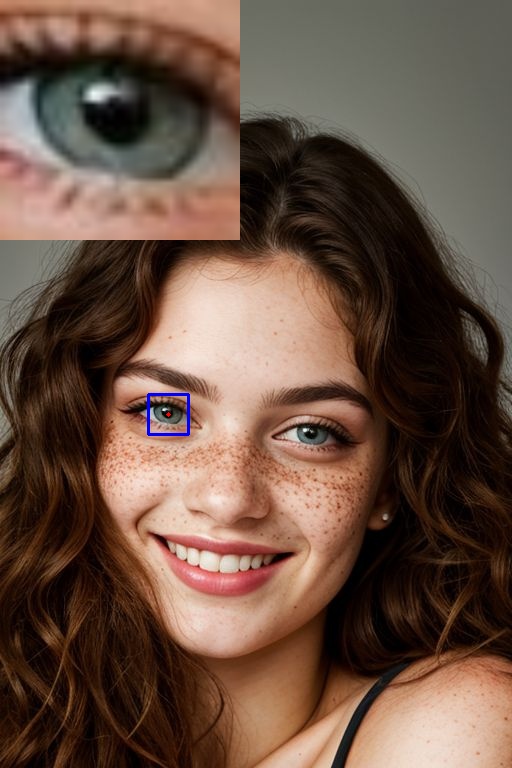
Deepfake technologies, however, struggle to recreate this level of detail. Algorithms like Generative Adversarial Networks (GANs), commonly used in deepfake creation (learn more about GANs here: https://www.tensorflow.org/tutorials/generative/gan), often produce iris patterns that appear blurry, overly smooth, or irregularly distorted. This is because these systems prioritize broader facial features over the micro-details of the eye. For instance, a real iris might display delicate radial lines and crypts, while a deepfake iris might look unnaturally uniform or lack depth.
Color Distribution in the Iris
Beyond patterns, the color distribution within the iris is another giveaway. Real human eyes exhibit subtle gradients—mixtures of hues that shift naturally from the pupil outward. These transitions are influenced by genetics and lighting conditions, as explained in this article on eye color genetics: https://www.nature.com/articles/s41598-018-36963-9. In contrast, deepfake-generated irises often show either overly uniform coloring—lacking natural variation—or exaggerated vibrancy that appears digitally enhanced. Tools like Adobe Photoshop’s color analysis (see Adobe’s guide: https://helpx.adobe.com/photoshop/using/color-management.html) can highlight these anomalies in manipulated images, where saturation levels may seem unnatural.
Iris Deformation: A Deepfake Flaw
Another critical aspect for detecting deepfakes is the deformation of the iris. In real footage, the iris maintains a consistent, symmetrical shape, even as the eye moves or the camera zooms. This stability stems from the eye’s anatomy, detailed in this overview of ocular structure: https://www.britannica.com/science/eye-anatomy. Deepfake algorithms, which often reconstruct images pixel by pixel, frequently introduce distortions. These can manifest as irregular edges or warping, especially noticeable during rapid head movements or close-up shots.
For example, research from the University of Southern California (USC) on deepfake detection techniques (https://viterbischool.usc.edu/news/2021/06/usc-researchers-develop-new-tool-to-detect-deepfakes/) highlights how inconsistencies in iris shape can betray synthetic media. A deepfake iris might stretch unnaturally or lose its circularity, appearing oval or jagged—flaws that become more apparent under scrutiny with forensic tools like those described by Forensically: https://29a.ch/photo-forensics.
The Pupil: Shape and Light Response
The pupil, the black aperture at the center of the iris, is equally revealing. In natural settings, pupils are perfectly round and dynamically adjust to light: dilating in darkness and constricting in brightness. This reflex, known as the pupillary light response, is well-documented in neuroscience studies: https://www.sciencedirect.com/topics/neuroscience/pupillary-light-reflex. High-quality cameras capture these changes seamlessly, making the pupil a reliable authenticity marker.
Deepfake technologies, however, often fail to simulate this behavior realistically. A synthetic pupil might remain static despite shifting light conditions—a dead giveaway in video analysis. Alternatively, it might exhibit erratic resizing that doesn’t align with environmental cues. For a practical demonstration, tools like OpenCV (https://opencv.org/)—an open-source computer vision library—can track pupil movement and highlight inconsistencies in manipulated footage.
Pupil Shape Distortions
Even the shape of the pupil can expose deepfakes. In genuine recordings, pupils maintain symmetry between both eyes and a consistent circular form. Deepfake algorithms, constrained by computational limits, sometimes produce pupils that are oval, irregularly edged, or misaligned between the eyes. A report by MIT Technology Review (https://www.technologyreview.com/2020/02/14/844678/how-to-spot-a-deepfake/) notes that such asymmetries are common in early deepfake iterations and persist in less sophisticated tools.
Unnatural Pupil Deformation: A Subtle Clue
Pupil deformation extends beyond shape to symmetry and synchronization. In real humans, both pupils typically dilate or constrict in unison—a phenomenon called consensual response (see this explanation: https://www.aao.org/eye-health/anatomy/pupil). Deepfakes, however, may depict one pupil behaving differently from the other, such as dilating while the other remains static. These subtle discrepancies, though harder to spot with the naked eye, are detectable through frame-by-frame analysis using software like FFmpeg (https://ffmpeg.org/) or MediFor (https://www.darpa.mil/program/media-forensics).
Why Eyes Matter in Deepfake Detection
The eyes’ complexity—spanning the iris’s unique patterns, the pupil’s dynamic responses, and their interplay with light—makes them a cornerstone of deepfake detection. While deepfake technologies excel at mimicking skin texture or lip movements (as seen in tools like DeepFaceLab: https://github.com/iperov/DeepFaceLab), they falter at replicating the eyes’ nuanced realism. This vulnerability is why researchers and forensic experts emphasize ocular analysis in their work. For instance, a study by IEEE (https://ieeexplore.ieee.org/document/9415263) underscores how eye-based anomalies can achieve detection rates exceeding 90% in controlled tests.
Moreover, as deepfake tools evolve—powered by advancements like those from NVIDIA’s AI research (https://research.nvidia.com/publication/2020-12_Progressive-Growing-of)—the eyes remain a stubborn hurdle. Their microscopic details and physiological behaviors defy easy simulation, offering a reliable litmus test for authenticity.
Practical Applications and Tools
For those interested in spotting deepfakes, focusing on the eyes is a practical starting point. Software like Sensity (https://sensity.ai/) and Microsoft’s Video Authenticator (https://www.microsoft.com/en-us/ai/ai-lab-video-authenticator) incorporate eye analysis into their detection suites. Meanwhile, enthusiasts can experiment with open-source platforms like Detectron2 (https://github.com/facebookresearch/detectron2) to build custom detectors targeting iris and pupil irregularities.
In conclusion, the human eye’s intricate design—its patterns, colors, deformations, and light reactions—stands as a bulwark against deepfake deception. By zooming in on these features, we can unmask even the most convincing forgeries, preserving trust in visual media.onvincing forgeries, preserving trust in visual media.
Schreiben Sie einen Kommentar